

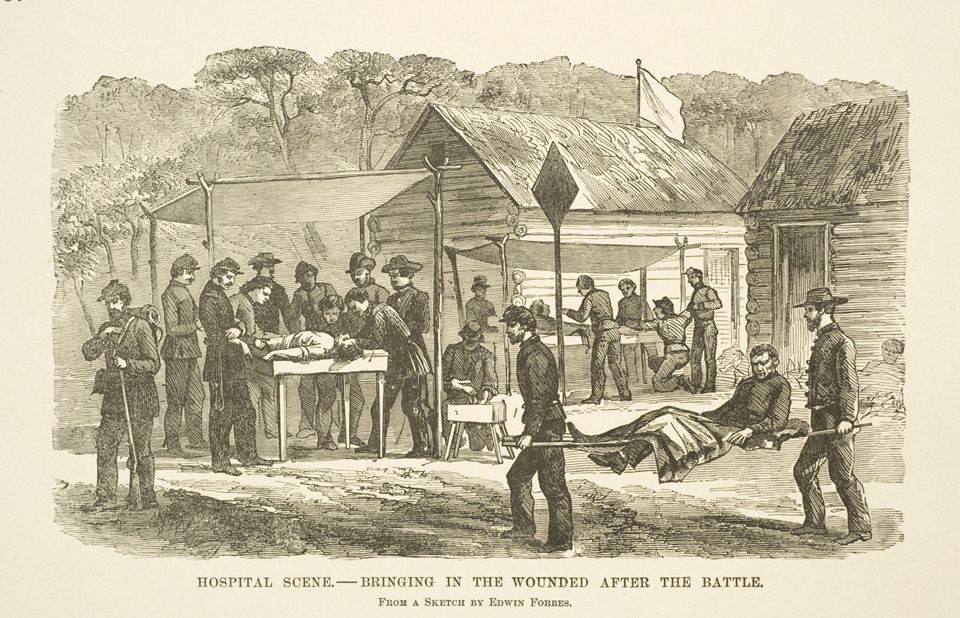
The Civil War was the bloodiest conflict in American history, taking place in over 10,000 locations. Approximately 620,000 people (about 2% of the population). That number was later revised to 752,000 (Rielly 2016). The Civil War claimed the lives of more Americans than all other conflicts combined. Numerous additional soldiers suffered disabilities. Mississippi spent twenty percent of its yearly budget on prosthetic limbs for its veterans the year the war ended.
Warfare-related injuries and illnesses are the two main causes of death for soldiers. Combat-related deaths were attributed to several factors, including inexperienced surgeons, a lack of a coordinated system to remove injured soldiers from the battlefield rapidly, wound infections resulting from a lack of awareness of the importance of sterile technique, and battlefield tactics that lagged behind technological advancements in weapons. Poor nutrition, lack of immunity to childhood infections, crammed camps, disregard for hygiene by line officers, poor pre-enlistment screening of recruits, and a dearth of specialized medical treatments were among the causes that contributed to disease-related mortality.
Medical and surgical care during the American Civil War in 1865 was primitive. This period is often referred to as the Middle Ages of medicine. Physicians practiced in an era before the germ theory of disease was established, thus before sterile technique and antisepsis were known, and with very few effective medications.
Medical personnel usually had some scientific training, so they learned much about saving people’s lives. In 1862, there were only six pharmacy colleges in the US. Most doctors prescribed, compounded, and dispensed their medications. The germ theory of disease would not be established until 1870 and Koch’s postulates in 1890. Disease was thought to be a result of either direct or indirect inflammation. There were no antibiotics.
On April 11, 2024, the Arizona Supreme Court decided that women should be subject to the 1864 law that prevents abortions. (The 1864 Arizona law forbidding most abortions, upheld by the State Supreme Court, also sets the age of consent for females at 10 Years.)
The governor appoints seven justices to serve on the Arizona Supreme Court. They may stand for retention to regular terms of six years. One justice is selected by fellow justices to serve as chief justice for a five-year term. In addition to handling case work, the chief justice oversees the administrative operations of all the state courts in Arizona.